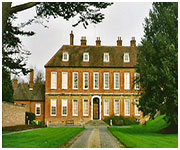
The Tudor Elizabethan Period 1505 -1642
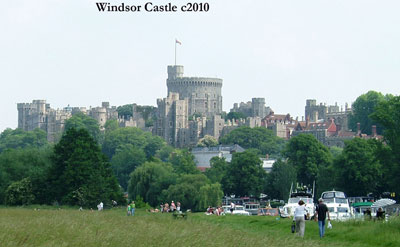 This must have been an exciting time for the people living at Bradenham.
There would have been many famous people visiting the estate, hunting in the woods and walking in the gardens as England established itself as a powerful nation.
The Windsors were descended from an old Norman family who held the Barony of Windsor and had possibly been Wardens of Windsor Castle hence the surname.
- 1505 John Scott's heirs sold the estate to Andrew Windsor. The estate remained the property of the Windsor family for nearly 140 years.
- 1509 Andrew Windsor was knighted at the Coronation of Henry VIII.
- 1513 Andrew accompanied King Henry VIII to war in France and was present at the Battle of Spurs.
- 1529 Andrew was created a member of Parliament and the first Lord Windsor of Bradenham for services to the King. He was also Keeper of the King's Wardrobe. In this position
he would have been well acquainted with Henry his intrigues and the political manoeuvres over Henry's first 6 wives.
- 1532 William Windsor Andrew's son was one of the Knights of the Bath at the coronation of Queen Anne Boleyn. He also served as Sheriff of Buckinghamshire and was a supporter of Queen Mary Tudor.
- 1543 William succeeded his father and became second Lord Windsor. It was William who rebuilt Bradenham House, added the chapel to the chancel of Bradenham Church,
and passed on some of his land adjacent to the church to be used as a burial ground. The new Manor house was built in Tudor style probably in the shape of the letter E,
with its main entrance facing south and approached by a carriage drive swinging round past what is now the back of the house.
- 1558 Lord William died leaving 7 sons and 9 daughters. He was buried with great pomp at Bradenham and his eldest son Edward Windsor became Lord of the Manor and 3rd Baron of Windsor.
Edward married Catherine, daughter of John, Earl of Oxford and had a large family.
- 1566 Queen Elizabeth I visited Bradenham Manor and stayed a night en route from the University at Oxford via Hampden House. A path had to be cut through the dense woods to allow the Queen and
her retinue to make their way to Bradenham. The path can still be seen today and is known as the 'Queen's Gap'
- 1574 Lord Edward died at Spa, Belgium where he had gone for his health. In his will he ordered that his body should be buried at Liege and his heart sent home to be buried at Bradenham.
Enclosed in a lead casket, his heart was placed in the crypt of the chapel of St Botolph's near the body of his father who had been buried there 15 years earlier.
- 1574 Frederick Lord Windsor succeeded his father and was well known for his dexterity at the jousts and tournaments that were fashionable at the time.
- 1585 Henry Lord Windsor succeeded his brother.
- 1605 Thomas 6th Lord Windsor succeeded his father. Thomas was a nobleman of great public spirit and was highly accomplished. He was created a Knight of the Bath in 1610.
- 1623 Thomas as Rear Admiral of the Fleet was sent to bring Charles Prince of Wales out of Spain. The prince ascended the throne as Charles I in 1625, and in 1639 invited Lord Windsor to
attend on him which he did until his death in 1642 during the Civil War.
- 1642 Thomas died and as he and his wife, Catherine daughter of the Earl of Worcester, had no children Bradenham Manor was passed to a relative Thomas Windsor Hickman who sold the estate. Thomas
Windsor Hickman became the Earl of Plymouth in 1682. His line continues to this day and the Earls of Plymouth have their seat at Oakley Park, Ludlow in Shropshire.